Your retinal microvasculature carries cardiovascular and metabolic signal years before it shows up in blood work. Eyro reads it in 30 seconds.
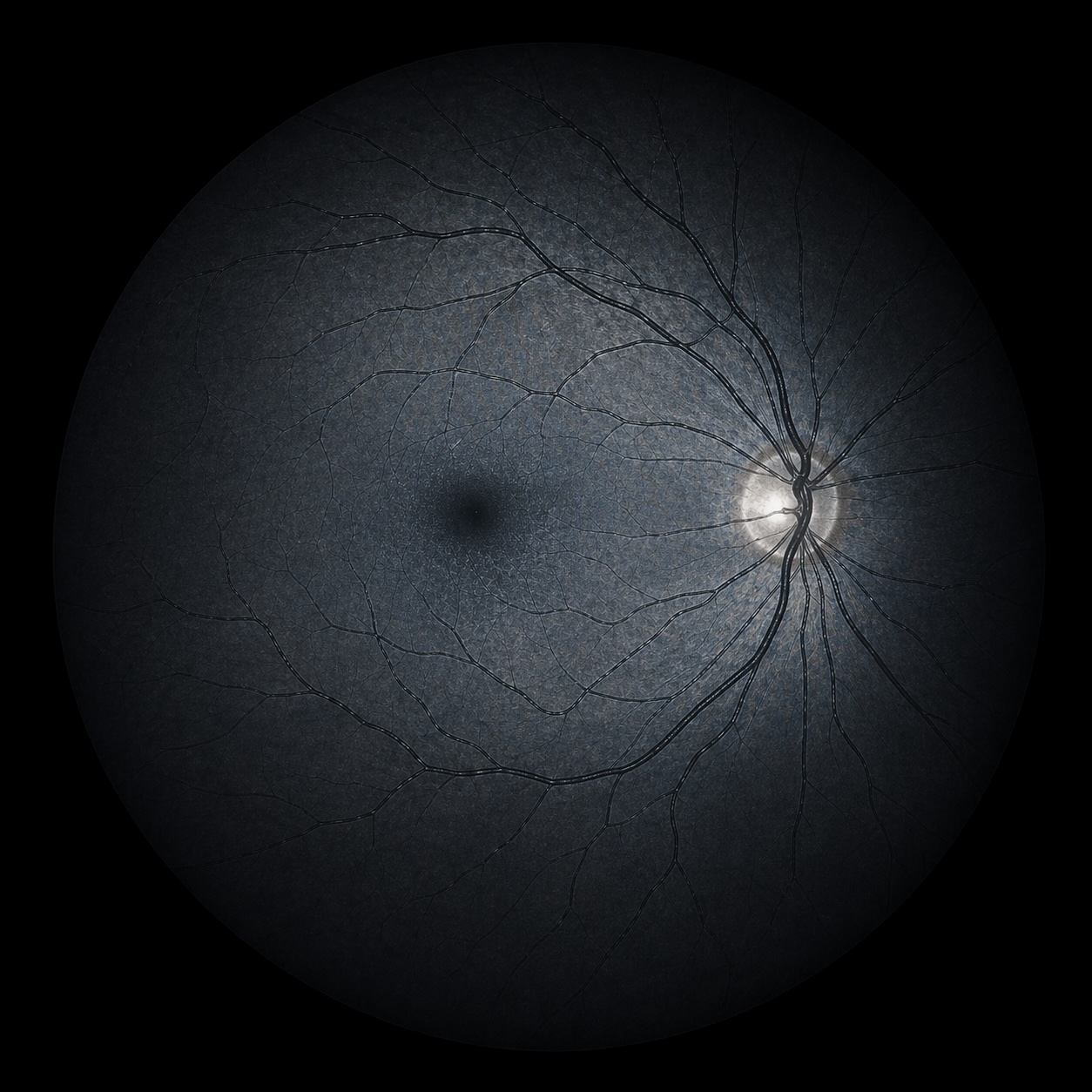
You rest your chin, look at a soft green dot, and a medical-grade fundus camera takes two photographs — one of each retina. That's the entire appointment. No dilation drops, no contrast agent, no radiation. You walk out and get on with your day.
Retinal arterioles share embryological origin and structural similarity with cerebral and coronary microvasculature. When systemic vascular stress begins — from glucose dysregulation, hypertension, inflammation, or lipid dysfunction — it shows up here first. Years before plaque is detectable on a CT scan. Years before HbA1c crosses a threshold.
Mediwhale's CR-DCS algorithm reads vessel calibre, tortuosity, arteriole-to-venule ratio, and optic disc features to generate a five-year cardiovascular event probability. Validated across 44,000+ patients in peer-reviewed studies with AUC 0.83 for predicting major adverse cardiovascular events — comparable to coronary calcium scoring, without radiation, without contrast, without a referral.
Lancet Digital Health · 2022 · Rim et al.“We didn't invent this signal. We built the way to read it quarterly, at scale, in the places people already are.”
Six surfaces. Each one built around a single question: what moved your vessels since the last scan, and what to do about it before the next one.

Eyro pop-ups happen at clinics, gyms, performance centres, and partner offices across Amsterdam. 30 seconds, no appointment longer than 10 minutes, results in your inbox before you leave.
Eyro launches publicly in Q3 2026. Early-access members get priority pop-up slots, first access to the longitudinal app, and the founding-member subscription rate locked for life.